Loading...
Serving Easton, MA and surrounding areas. (774) 568-8870
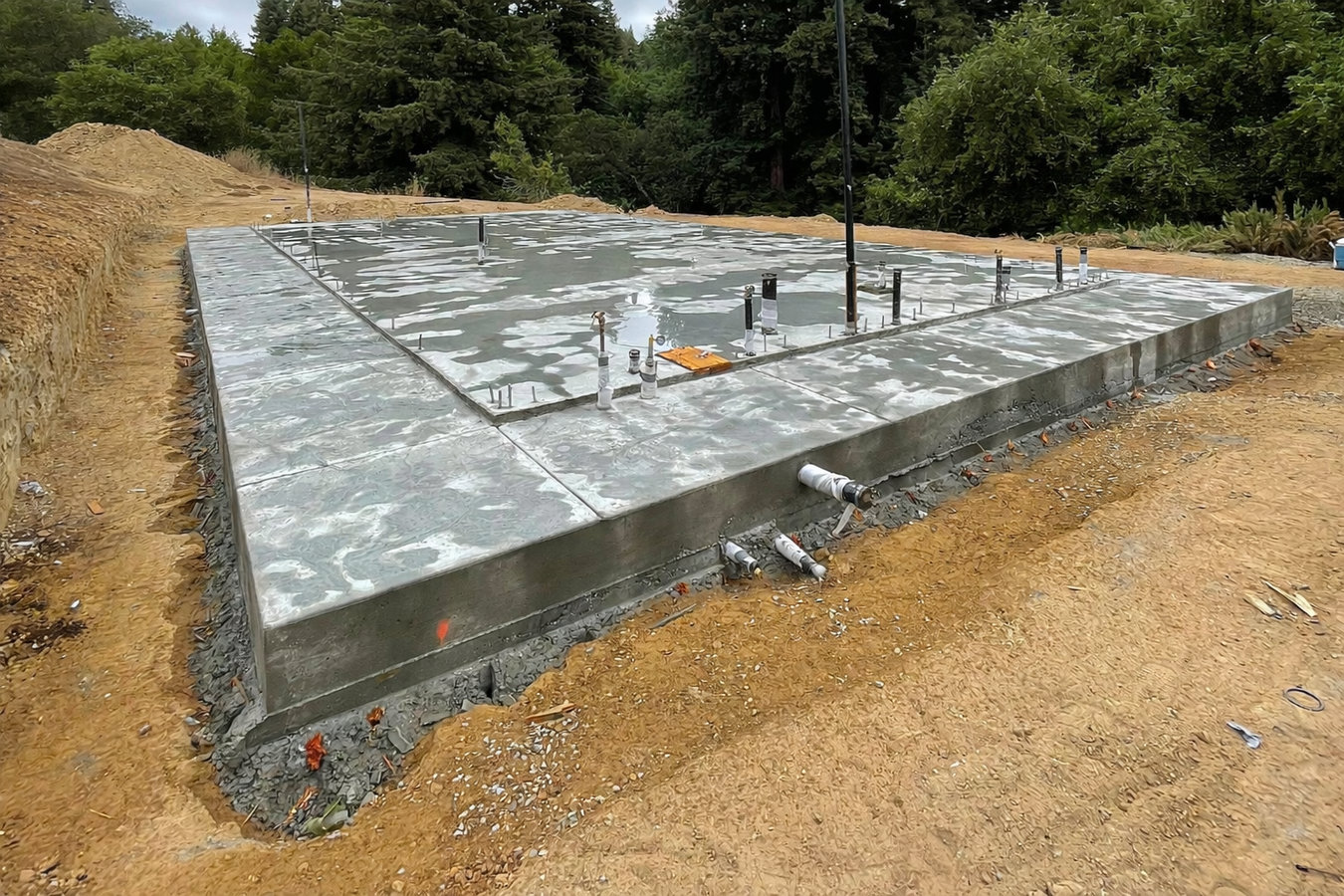
Adding a garage, sunroom, or workshop? A properly built slab foundation is what separates a structure that stays solid for decades from one that cracks in a few winters. We build slabs in Easton with the frost-depth footings and soil prep this area demands.
Slab foundation building in Easton means excavating the area, compacting a gravel base, laying a moisture barrier and reinforcement, setting forms with deeper perimeter footings for the frost line, and pouring a single layer of concrete that becomes both the floor and the structural base - most residential slab projects take one to two weeks from site prep through curing.
Easton has a significant number of homes from the 1950s through the 1980s, many of which are being expanded with additions, detached garages, and outbuildings. A slab is the most practical and cost-effective foundation for those projects because it avoids the expense of a full basement excavation. The key is getting the sub-base preparation and frost protection right - shortcuts taken underground show up above ground within a few winters.
If you are building a new structure that also needs concrete steps or an entry, our foundation installation work covers larger below-grade foundations for full home construction and basement projects. Not sure which type fits your project? Contact us for an honest assessment.
If you are adding a garage, sunroom, or extra room to your Easton home and the ground does not slope dramatically, a slab foundation is almost certainly the most practical option. You do not need a basement under a garage, and digging one adds significant expense. A properly built slab gets the structure up faster and keeps the budget in check.
Hairline cracks in concrete are normal and usually harmless. But if you can fit a quarter into a crack, or if one side of a crack sits higher than the other, the slab may be moving. In Easton, where glacial till soil can behave differently from one corner of a lot to another, uneven settling is not uncommon in older slabs and usually gets worse without intervention.
If water collects on your concrete floor after a heavy rain rather than draining away, the slab may have settled out of level, or the drainage layer underneath may have failed. Eastern Massachusetts gets significant annual rainfall, and a slab that does not drain properly will only worsen over time, eventually threatening walls and stored belongings.
If a door in a relatively new addition suddenly starts sticking, or you can feel a slope when walking across the floor, the slab underneath may have shifted. This can happen when soil was not properly compacted before the pour, or when frost heave has pushed part of the slab. In Easton's climate, a single hard winter can reveal a slab that lacked adequate frost protection.
Every slab project we build in Easton starts with a site visit to assess the soil and grade before any pricing is finalized. We excavate to the correct depth, compact a gravel sub-base, lay a poly moisture barrier, and install rigid foam insulation at the perimeter when conditions call for it. Reinforcing steel or wire mesh goes in before the pour. We cut control joints into the surface before the concrete hardens to give it a planned place to flex rather than cracking randomly. Our foundation installation service handles full below-grade basement foundations for homeowners building a new primary structure.
For projects that also need concrete footings for posts, columns, or structural supports alongside a slab, we coordinate that work together - see our concrete footings page for details on that service. Permit coordination with the Town of Easton Building Department is included on every job - we pull the permit, schedule inspections, and provide you with all paperwork at completion.
Best for homeowners adding a detached or attached garage - sized for single or double bay with thickened perimeter footings for the wall loads above.
Best for homeowners expanding living space with a four-season room, mudroom, or home office addition tied to the existing house footprint.
Best for freestanding outbuildings where a level, durable concrete floor matters more than the structure above - built to handle equipment loads and freeze-thaw cycles.
Best for heated additions where reducing heat loss through the floor matters - rigid foam under and around the perimeter reduces energy loss in Easton winters.
Easton sits on glacial till - a mix of clay, sand, gravel, and occasional boulders left behind by the last ice age. This soil type behaves differently from one part of a lot to another. One corner may have solid gravel while another has soft clay that compresses under weight. Before pouring any slab, we assess the soil on your specific lot and address problem areas. Skipping this step is the most common reason slabs in this region settle unevenly within a year or two. Add the freeze-thaw pressure Easton winters put on anything in the ground, and the case for doing the sub-base work correctly becomes clear. Contractors who serve Mansfield and Norton face the same glacial soil conditions and frost-depth requirements, which is why local experience in this specific part of Bristol County matters.
The Town of Easton Building Department requires a permit for any slab serving as a foundation, and an inspector will visit before concrete is poured to verify that the forms and reinforcement are correct. We handle the permit process from start to finish. Spring is the busiest season for concrete work here, and contractors book up quickly - if you are planning a project for late spring or summer, getting your estimate in hand early makes a real difference in securing a start date that works for your schedule. A good reference on seasonal concrete best practices is available from the Portland Cement Association.
We reply within one business day. We ask a few basic questions - what you are building, how big the slab is, and whether you have a permit yet - then schedule a site visit to assess the soil and access before giving you a firm price.
After the site visit you receive a written quote that breaks down excavation, gravel, concrete, labor, and permit fees separately - no lump sums. We pull the building permit from the Town of Easton; allow one to two weeks for approval.
Once the permit is approved, we excavate, compact the gravel base, install the moisture barrier and reinforcement, and set the forms. This preparation phase usually takes one to two days and is the most important part - everything underground determines how the slab performs for decades.
On pour day the crew fills the forms, finishes the surface, and cuts control joints before the concrete hardens. Light foot traffic is safe after 24 to 48 hours; full strength takes about a month. The building inspector signs off, and we provide all permit paperwork at completion.
Spring books fast in Easton - reach out now and we will lock in your start date before the season fills up. No pressure, no obligation.
(774) 568-8870We design every slab with the perimeter footing depth that Easton winters demand - no shortcuts that save a little on excavation now and cost you a cracked foundation later. This is a specific technical requirement for New England construction, and we treat it as non-negotiable on every job.
Easton's glacial till means the ground under your lot may vary considerably from one spot to another. We check what is actually beneath the surface before pricing the job, so you are not surprised by a change order after we start digging. What we find shapes the gravel work, and what we do with that gravel shapes how your slab performs for decades.
We manage the permit application with the Town of Easton Building Department from start to finish - including scheduling the pre-pour inspection and delivering completed paperwork to you at the end of the job. Unpermitted slab work creates real problems at resale and with insurance claims; we do not offer that as an option. The Massachusetts Home Improvement Contractor program provides the framework for how registered contractors operate in the state.
We give you a concrete timeline - permit approval window, prep days, pour day, and curing period - before any equipment arrives. You will know when the concrete truck is coming, how long the area will be off-limits, and when the inspector will visit. No surprises, no silent weeks of waiting to hear what is happening.
These are the details that determine whether a slab lasts 10 years or 40. We focus on getting the groundwork right because that is what protects your investment in the structure you are building on top of it.
Full below-grade basement and crawl space foundations for new homes and major additions in Easton.
Learn MorePoured concrete footings for posts, columns, decks, and structural supports that need a stable base.
Learn MoreSpring and summer slots fill quickly in this area - contact us now for a free site visit and written estimate before the schedule closes up.