Loading...
Serving Easton, MA and surrounding areas. (774) 568-8870
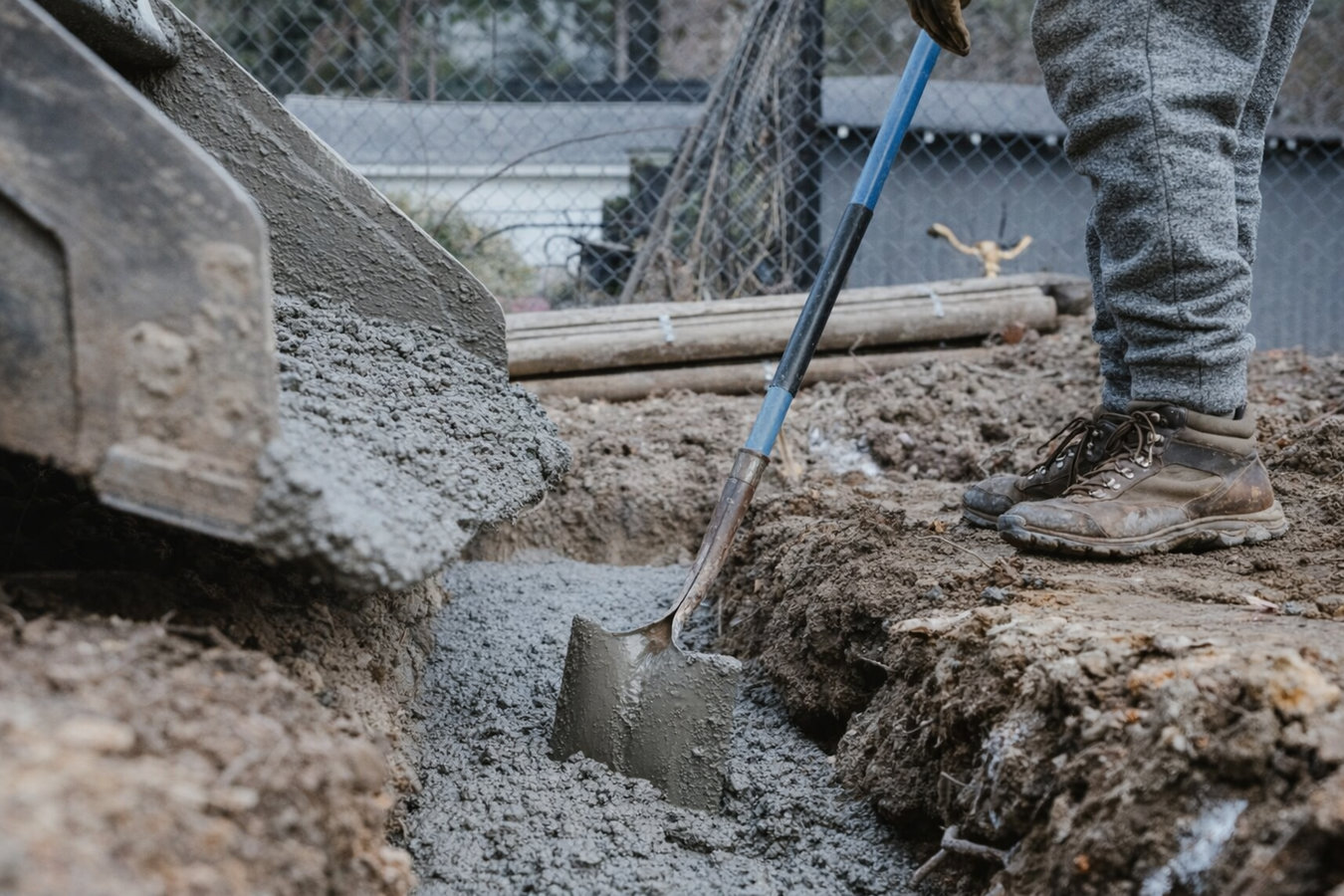
A deck, addition, or garage is only as solid as what holds it up. We install concrete footings in Easton dug to the full 48-inch Massachusetts frost depth, with every job permitted and inspected by the town before concrete is poured.
Concrete footings in Easton means digging holes or trenches to at least 48 inches below grade - the Massachusetts frost line - setting temporary forms to shape the concrete, pouring after a mandatory town inspection confirms depth and dimensions, and backfilling once the concrete has cured. A typical residential footing project for a deck or small addition takes one to three days of active work, with the permit and inspection process adding one to two weeks to the front of the timeline.
In Easton, a lot of footing projects come up because a homeowner is adding a deck, finishing a basement, or building an addition onto a mid-century home where the existing footings were not designed to carry the additional load. Whether you are building something new or suspect the footings under an older structure are not up to current standards, a site visit is the right first step - not a phone quote.
For projects that involve a full slab below a new structure - a garage, workshop, or addition - our foundation installation service covers the full scope from excavation through waterproofing and backfill.
If you can see a gap opening between your deck and the house, or the deck surface is no longer level, the footings underneath may have shifted or settled. In Easton, this often happens after a hard winter when frost heave pushes shallow footings upward and they do not settle back evenly. A leaning deck is a safety hazard, not just a cosmetic problem, and it tends to get worse each winter rather than stabilizing on its own.
Any new structure that carries weight needs properly engineered footings before anything is framed above it. If a contractor proposes starting framing without first discussing footings, depth, and permit requirements, that is a red flag worth addressing before any work begins. Footings are not a step that can be retrofitted after the structure is up.
Stair-step cracks in masonry or diagonal cracks near corners can signal that the footing below is moving or was never adequate. Easton's variable soil - which can include pockets of soft fill or clay in neighborhoods that were developed over wetland-adjacent land - makes uneven settling more likely in some areas. A crack that grows wider over multiple seasons deserves a professional evaluation.
Older decks in Easton were sometimes built with posts resting on surface-level concrete pads rather than footings buried below the frost line. After a few winters of freeze-thaw cycles, those pads shift. If your deck posts look like they sit on top of the ground rather than running down into it, the footings likely do not meet current standards and are worth a professional look before the next winter.
Every footing project starts with a site visit - not a phone quote. We assess the actual ground on your property, confirm the footing locations and layout with you, and submit the building permit application to the Easton Building Department before any digging begins. When the inspector has confirmed depth and dimensions, we set the forms, pour, and clean up the site. The concrete cure time varies by weather and season, but we give you a clear timeline for when framing can safely begin above the footings. For projects that go beyond individual footings and involve a full continuous foundation wall - a full basement, a replacement foundation, or a crawl space - our foundation installation service handles that full scope.
If your footing project is part of a larger infrastructure upgrade - say, a new garage and paved lot at the same time - we can coordinate the footing work with our foundation raising service for cases where an existing structure needs to be lifted while new footings are set beneath it. Coordinating both in one mobilization reduces cost and site disruption.
Best for homeowners building a new deck, porch, or screened room where individual post footings need to go in at the 48-inch frost depth before framing begins.
Best for new attached additions, detached garages, and outbuildings where a continuous or grid-pattern footing system is needed to support a full framed structure above.
Best for existing structures where the original footings are too shallow, cracked, or undersized for the load above - often the case with older Easton homes where standards were less stringent when the structure was first built.
Best for workshops, barns, carriage houses, and other accessory structures where the building will carry real loads and needs a footing design matched to that use.
Massachusetts requires footings to go at least 48 inches below the surface - four feet - because that is how deep the ground can freeze in a hard winter. That requirement means more digging, more material, and more time than the same project would take in states with shallower frost lines. Easton's soil adds another layer of complexity. The region sits on glacially deposited material where the ground can shift from sandy gravel to dense clay or even ledge rock within a short distance on the same property. Clay and soft fill compress under load and drain poorly, which can cause footings that were poured correctly to still shift if the surrounding soil is not properly assessed beforehand. A contractor who quotes your job without visiting the site is not accounting for what is actually in the ground on your parcel.
We work in all five of Easton's villages - North Easton, South Easton, Eastondale, Chartley, and Furnace Village - as well as throughout the surrounding region. Homeowners in Stoughton and Norton face the same frost depth requirements and soil variability - we bring the same site assessment approach and permit handling to every project, regardless of which town it is in.
We visit your property, look at the work area and the ground conditions, and give you a written estimate that includes the number of footings, required depth, permit costs, and labor. We do not quote over the phone without seeing the site - Easton's soil variability makes that guess work. You will hear back within one business day.
We submit the building permit application to the Easton Building Department. Review typically takes one to two weeks. We schedule your start date as soon as the permit is approved - you do not need to track it or manage the process. Permit fees are usually modest and are included in your quote.
The crew digs holes to at least 48 inches deep, then the Easton Building Department inspector visits to verify depth and dimensions before any concrete goes in. This is required by law and protects you - it puts an independent set of eyes on the work before it is buried. We schedule the inspection; you do not need to arrange it.
Once the inspection is approved, concrete is poured and the crew levels the tops of the footings to receive posts or walls. The site is cleaned up the same day. We give you a clear date for when curing is complete and framing can safely begin - usually a few days to a week depending on season and weather.
We visit your site, assess the actual ground conditions, and give you a written estimate before you commit to anything.
(774) 568-8870We look at the actual ground on your property before giving you a price. Easton soil ranges from sandy glacial deposits to clay-heavy patches to ledge rock - sometimes within the same yard. A phone quote that does not account for what is underground is a guess, and the cost difference between sandy soil and rock can be significant. You will not face an unexpected bill mid-project because we assessed the site correctly beforehand.
Massachusetts requires footings at 48 inches for good reason - footings set above that depth get pushed by frost every winter. We dig to the required depth on every job, and the town inspection before the pour confirms it independently. A footing that passes inspection is not just compliant - it is documented proof that the work was done correctly before it was buried.
We manage the permit application with the Easton Building Department and schedule the required pre-pour inspection. You are not left managing paperwork or coordinating with the town. Permitted footing work is on record and protects your investment when you sell the property or apply for a renovation permit later.
The working season for concrete footings in Easton runs roughly from late April through October. Contractors fill up fast once the ground thaws - reaching out in late winter or early spring puts you at the front of the queue. We are upfront about our availability so your deck, garage, or addition is not delayed by a scheduling backlog you did not know about until May.
A footing is the one part of your project that you will never see again once it is buried - but it is the part that determines whether everything above it stays plumb and solid for decades. Getting it right the first time, with a proper site assessment, correct depth, and a passed inspection on record, is what makes everything built on top of it trustworthy.
When an existing structure needs to be lifted so new footings can be set beneath it, foundation raising and footing work are often done together in a single mobilization.
Learn MoreFor projects that go beyond individual footings and require a full continuous foundation wall - a new basement, crawl space, or complete replacement foundation.
Learn MoreSpring slots fill fast - reach out now so your deck or addition is not pushed to next season waiting for a start date.