Loading...
Serving Easton, MA and surrounding areas. (774) 568-8870
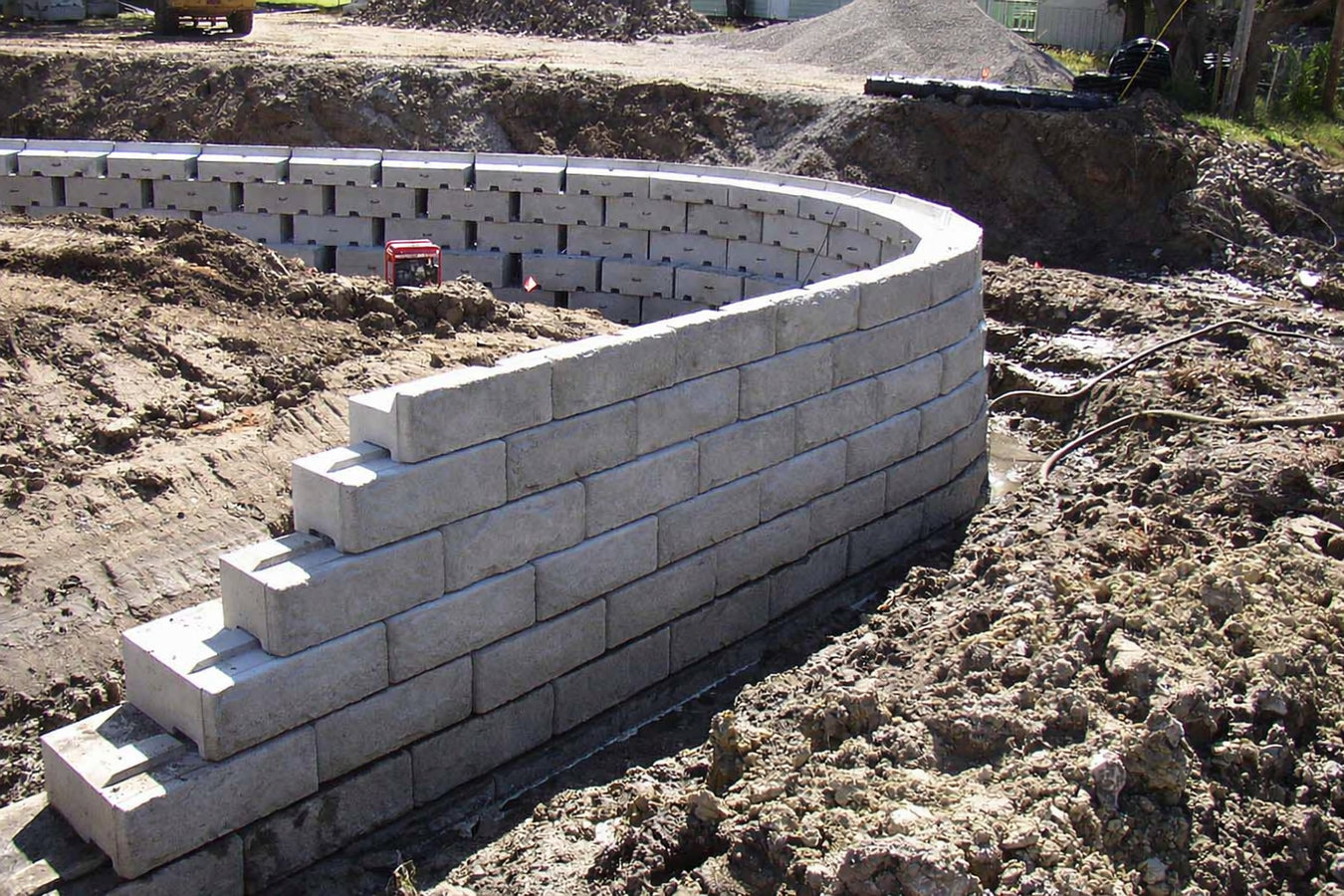
A sliding hillside or crumbling old wall keeps getting worse every season. We build reinforced poured concrete retaining walls in Easton that hold back soil, drain properly, and last decades through New England winters.
Concrete retaining walls in Easton are built by excavating a stable footing, setting steel reinforcing bars inside a temporary form, pouring the concrete in one continuous operation, installing a drainage layer and pipe behind the wall, and then carefully backfilling in stages - most residential jobs take two to five days of active work with an additional curing period before backfilling is complete.
A lot of Easton homeowners contact us because a slope in their yard is eroding a little more every spring, or an existing wall that was built decades ago is now leaning or cracking. Both are problems that get worse with time, not better. Uncontrolled erosion can eventually threaten a driveway, garden, or even the ground near your foundation. If you have a slope that has always felt like wasted space, a retaining wall can turn that hillside into a level, usable terrace - room for a garden, a patio, or a safe play area. Many homeowners pair their wall project with concrete floor installation work happening at the same time to consolidate scheduling.
The quality of a retaining wall is almost entirely invisible once the job is done. It lives in the drainage behind the wall, the depth of the footing, and the steel reinforcement inside the concrete - none of which you can see after the fact. That is why who builds it matters more than almost any other factor.
If bare patches appear on a hillside after a rainstorm, or soil collects at the base of a slope, the ground is eroding. Easton's spring snowmelt and April rains put real pressure on unprotected slopes. What starts as a cosmetic problem can eventually undermine a driveway, garden bed, or the ground near your foundation.
A wall that was once straight but now curves or tilts away from the hillside is under more pressure than it can handle. Many older walls in Easton's established neighborhoods were built without adequate drainage or reinforcement and are reaching the end of their useful life. A leaning wall is a structural problem that will get worse without intervention.
Small hairline cracks in concrete are normal, but cracks you can fit a finger into - or cracks that were narrow last year and wider this year - mean the wall is moving. Easton's freeze-thaw winters accelerate this process: water gets into a crack, freezes, expands, and makes it larger, season after season.
If water collects against your house after a storm and your yard slopes toward the foundation, a retaining wall combined with regrading can redirect that water. Easton's wet springs make this a common concern, and addressing the grading issue with a wall is often more effective than interior waterproofing alone.
We build new poured concrete retaining walls from scratch and replace aging or failing walls that have reached the end of their useful life. Every wall we build includes steel reinforcement inside the concrete, a properly excavated and set footing, a crushed-stone drainage layer behind the wall, and a perforated pipe at the base to carry water away from the wall year-round. For homeowners looking to transform a sloped yard into usable terraced space, we can design a multi-level wall layout that creates flat areas for gardens, patios, or lawn. If your project also involves steps connecting those levels, concrete steps construction can be added to the same project.
We also handle the permitting process through the Town of Easton Building Department for any wall that requires one. Walls over four feet tall almost always need a permit and sometimes an engineer's review - we account for the permit timeline in your project schedule so there are no surprises. Every written estimate spells out exactly what is included: excavation, drainage, reinforcement, backfill, and cleanup.
Best for homeowners who need a wall where none currently exists to hold back a slope or hillside.
Right for walls that are leaning, bowing, or cracking beyond the point where patching makes sense.
Suits properties with significant grade change where multiple low walls can create usable flat areas.
Ideal when regrading alone is not enough to redirect water away from the foundation.
For any site where water management behind the wall is the primary driver of the project.
We handle the Town of Easton permit process and engineering coordination for taller walls.
Easton sits in a climate zone where temperatures drop below freezing repeatedly from November through March. Every freeze-thaw cycle puts stress on a wall that was not built for it - water finds its way into small gaps, freezes, expands, and works against the structure season after season. The town also sits on glacially deposited soils: sandy loams and silty soils that drain well but do not hold a footing as firmly as dense clay or bedrock. In some areas, ledge rock sits just a foot or two below the surface, which can affect excavation cost and depth. A contractor familiar with Easton's soil conditions will ask about these variables during the site visit and factor them into the estimate rather than treating them as surprise add-ons. Easton also gets roughly 48 inches of precipitation per year, with spring snowmelt and April rain putting maximum pressure on slopes - which is often when homeowners first notice soil movement or wall cracking. According to the American Society of Civil Engineers, walls taller than four feet require engineering review because the lateral soil pressure at that height increases significantly.
Many of Easton's residential neighborhoods were developed in the 1950s through 1980s, and a lot of properties have existing walls built with older materials or methods that are now showing their age. We work across all five of Easton's villages as well as neighboring communities. Homeowners in Attleboro and Stoughton face the same glacial soil conditions and freeze-thaw pressures as Easton residents, and we account for those factors in every project we price.
We respond within 1 business day to schedule a free site visit. We need to walk your property in person before giving you any numbers - the slope, soil, and water flow all affect the design and cost. No phone estimates.
We walk the site, assess the slope and soil, look at how water moves through the area, and check for nearby utilities or structures. You receive a written estimate that spells out excavation, drainage, reinforcement, backfill, and cleanup - everything included.
If your wall requires a Town of Easton building permit, we submit the application on your behalf - plan for one to three weeks. Before any concrete is poured, the crew excavates to stable ground, calls 811 to mark underground utilities, and prepares the footing area.
Forms are built, steel rebar is placed, and the concrete is poured in one continuous operation for maximum strength. Once the concrete cures, the drainage layer and pipe are installed behind the wall, and the area is backfilled in careful stages to avoid sudden pressure on the new concrete.
Free site visit, written estimate, no obligation. We handle permits and respond within 1 business day.
(774) 568-8870Every retaining wall we build includes a crushed-stone drainage layer and a perforated pipe at the base - not as an optional upgrade, but as a standard part of every job. Water trapped behind a wall is the leading cause of wall failure, and we design against it from the start.
We handle the Town of Easton building permit application and coordinate with town inspectors for walls that require it. You should never have to navigate the permit office yourself. Permitted work is documented, inspected, and on record - which matters when you sell your home.
We use concrete mixed for cold-weather conditions and set footings below the frost line so the wall does not heave during winter. The American Concrete Institute sets standards for cold-climate concrete placement, and we follow them on every pour. Your wall should look the same next April as it did the day it was built.
We have worked on properties across Easton's five villages and know the variability in local soils - sandy loam in some areas, clay pockets in others, and occasionally ledge close to the surface. We ask about these conditions during the site visit and build them into the estimate rather than discovering them mid-project.
When you put these together - proper drainage, permitted work, cold-weather concrete, and genuine local knowledge - you get a wall built to last 50 years in this climate, not one that looks fine on day one and starts showing problems after the first winter.
New basement or garage slab installed with proper drainage prep and a surface finish suited to how you use the space.
Learn MoreSteps built to connect terraced levels created by a retaining wall project, or to replace crumbling entry steps.
Learn MoreSpring scheduling fills fast - reach out now to hold your spot before the busy season.