Loading...
Serving Easton, MA and surrounding areas. (774) 568-8870
A settled driveway, sinking garage floor, or tilted walkway does not have to mean full demolition. We raise sunken concrete slabs in Easton back to level, handle the permit, and have you walking on the surface the same day.
Foundation raising in Easton - also called slab lifting or mudjacking - involves drilling small holes in sunken concrete, pumping material beneath the slab to fill the void and push it back up, then patching the holes so the surface is usable. Most residential jobs run two to eight hours, and you can walk on the repaired slab the same day.
In Easton, the most common candidates are garage floors that have dropped away from the wall, driveways that tilt toward the house after a few hard winters, and front walkways that have developed a step where the slabs used to meet flush. These are not cosmetic problems - a tilted slab that directs water toward your foundation is actively making things worse every wet spring.
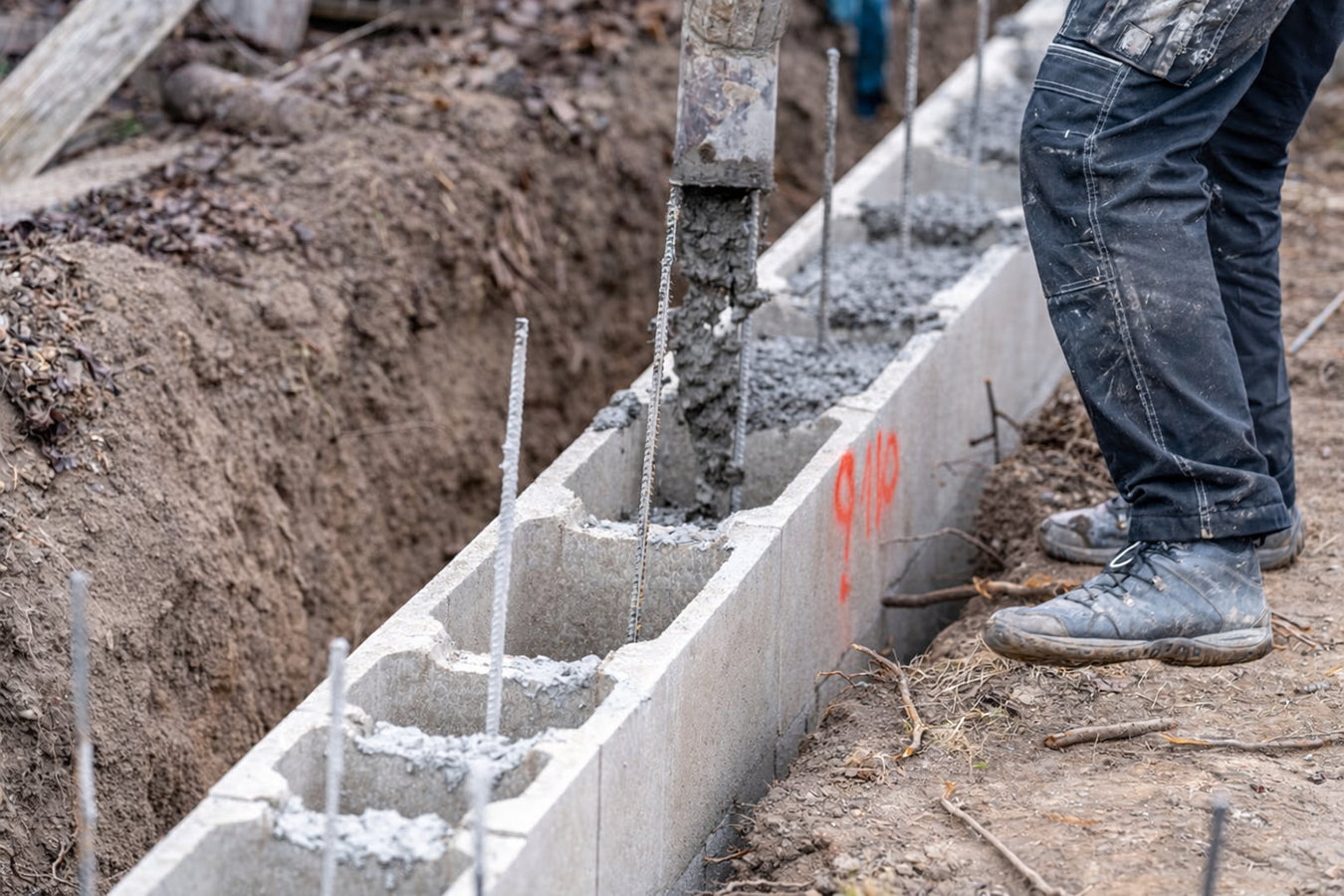
If the concrete itself is damaged - cracked through, crumbling, or broken into pieces - raising is not the right first step. In those cases, our slab foundation building service covers full removal and replacement of the concrete so you start fresh with a properly supported pour.
Stand at one end of your driveway or front walkway and look along the surface. If it looks like a ramp where it used to be flat, or if water pools in a spot it never used to, the slab has likely settled. In Easton, this often shows up most clearly in spring after the ground has gone through a full winter of freezing and thawing. Waiting through another season lets the problem get harder and more expensive to fix.
Walk around the inside perimeter of your garage and look where the floor meets the walls. A gap - even a small one - between the slab and the wall means the floor has dropped away from where it was originally poured. This is a common finding in Easton homes built in the 1960s and 1970s, where the original fill soil has had decades to compress and shift under the slab.
When a slab settles, it can pull the framing above it slightly out of square. If a door near your garage or ground-floor entry suddenly sticks, drags, or will not latch the way it used to, that can be an early sign the slab beneath it has moved. This is worth investigating before the movement gets worse and the door frame requires its own repairs on top of the slab work.
Not all cracks mean the slab needs raising - hairline surface cracks are common in older concrete. But cracks that run diagonally, have one side higher than the other, or are wider than a quarter-inch suggest the slab has shifted unevenly. In Easton's glacial till soil, this kind of uneven settling is more common than in areas with uniform sandy or clay soils, and it tends to grow worse each winter.
Every foundation raising job starts with an on-site assessment, not a phone quote. We look at the condition of the concrete, probe the area around the slab, and check drainage patterns before recommending a method. If the slab is structurally sound and the issue is lost support beneath it, we can usually lift it the same visit or schedule the work within a few days. For projects where a settled slab has affected surrounding hardscape - a driveway that has dropped and taken the adjacent walkway with it - we can coordinate with our concrete cutting team to remove and reset sections that are too damaged to raise cleanly.
We also look at what caused the slab to settle. If drainage near the slab is directing water toward the void beneath it, lifting without fixing that just resets the clock. We will tell you honestly whether a drainage correction is worth doing alongside the repair. For cases where the slab has settled because the underlying slab system needs full replacement, our slab foundation building service covers complete removal, base preparation, and new pour.
Best for homeowners who want a cost-effective repair on a sound slab that has lost soil support. The cement-and-soil slurry is pumped beneath the concrete and raises it back to level.
Best for areas with poor drainage, lightweight structures, or where minimal hole size matters. Foam cures faster than slurry, weighs less, and is less likely to wash out in wet soil conditions common in Easton's spring.
Best for attached or detached garage slabs that have settled away from the wall or dropped at the center, creating drainage problems or making the floor unusable for vehicles.
Best for exterior concrete panels that have settled unevenly, creating trip hazards, water pooling, or a slope that directs runoff toward the house rather than away from it.
Easton sits in Bristol County, where winters push soil through repeated freeze-thaw cycles from November through March - sometimes dozens of times in a single season. Water in the soil expands when it freezes and contracts when it thaws, slowly eroding the support beneath concrete slabs over many years. A significant portion of Easton's residential neighborhoods were developed between the 1950s and 1980s, and much of the concrete poured during that era sits over fill soil that has had decades to compress and shift. If your home was built before 1990, the chances that at least one slab has moved are real - even if the change has been gradual. Homeowners in Stoughton and Norton face the same glacial soil and winter conditions, and we work in both towns regularly.
Easton also receives roughly 48 inches of precipitation per year, and spring snowmelt combined with rain can saturate the ground quickly. Homes with inadequate grading or gutters that discharge close to the foundation are especially vulnerable - water pooling near a slab softens the soil beneath it and speeds up settling. The Massachusetts Geological Survey documents the glacial till soils that cover much of southeastern Massachusetts - a mix of clay, sand, gravel, and boulders that drains unevenly and shifts with moisture. That inconsistency is exactly why slabs in this area can settle on one corner while the other side stays put. The Town of Easton Building Department requires permits for structural repairs, and we handle that process for you from application through final inspection.
When you call, we ask a few basic questions - how large the area is, how much it has dropped, and how long it has been settling. This helps us figure out whether a site visit is needed or whether we can give you a ballpark range over the phone. You should hear back within one business day.
We come out to look at the slab in person - checking the condition of the concrete, probing the area around it, and reviewing drainage nearby. This visit usually takes 30 to 60 minutes. At the end, we tell you whether raising is the right fix, which method we recommend, and give you a written price - no obligation.
Structural work in Easton requires a building permit, and we handle that application from start to finish. Once the permit is in hand, we schedule your work date. Spring is the busiest season in southeastern Massachusetts - if you call in March or April, expect a wait of one to three weeks.
The crew drills small holes at measured intervals, pumps material beneath the slab until it rises to level, patches the holes, and cleans up the area. Most residential jobs finish in two to eight hours. You can walk on the surface the same day - and typically drive on a garage slab within 24 hours. The town inspector signs off and we coordinate that scheduling for you.
We come out, look at the slab in person, and give you a written quote - no pressure, no obligation. Spring books up fast in Easton.
(774) 568-8870A lot of Easton homeowners have had concrete raised only to watch it sink again two winters later because no one addressed the drainage problem underneath. We assess what caused your slab to settle before recommending a fix - so the repair holds through Easton's next round of freeze-thaw cycles, not just the current season.
Structural work in Easton requires a building permit, and skipping it can create real problems if you ever sell your home. We handle the application with the Town of Easton Building Department, coordinate the inspection, and make sure the work is on record - you do not have to track down paperwork or chase the building department.
We work in North Easton, South Easton, Eastondale, Chartley, and Furnace Village - across the full range of lot types and housing eras in this town. Whether your home is a mid-century Colonial in Chartley or a postwar cape near the village center, we have worked on similar properties nearby. Local presence means faster scheduling and no travel fees.
Our work follows American Concrete Institute best practices for slab repair and lifting. That means the right material selection, proper hole spacing, and a post-repair drainage review - not just pumping material under the slab and moving on. You get the repair done to a professional standard, not the minimum required to close the job.
These are not features we list because they sound good - they are the things that actually keep a foundation raising repair from becoming a repeat job. When you call us, you are working with a local contractor who will still be around if something needs attention after the work is done.
When a raised slab has sections too damaged to lift cleanly, we cut and remove them before setting a fresh pour.
Learn MoreFull removal and replacement of a failed or severely damaged slab when lifting is no longer the right answer.
Learn MoreSpring is our busiest season in southeastern Massachusetts - locking in your date now means you are not waiting weeks for an opening when the ground finally thaws.